
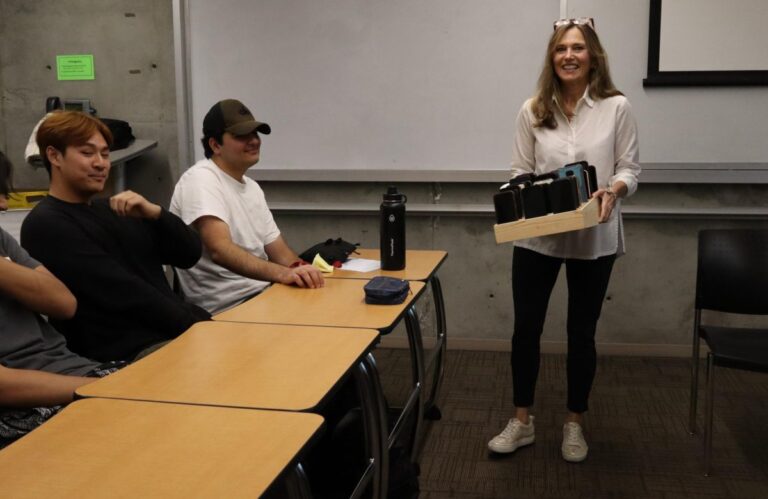
Professor Rose Cerofeci collects the phones of her English 1A students prior to class beginning on Sept. 30, 2024. Cerofeci instituted the “no phones” policy for her classroom to promote a better learning environment. (Erica Lee | The Union) Photo credit: Erica Lee
Let’s just get curious.
This is the classroom mantra of El Camino College English professor Rose Ann Cerofeci. For 16 years at ECC, she has lived by this code.
According to Cerofeci, being a professor at a community college was her vocation.
“Being a part of the beginning of their [students] educational journey is such a blessing,” Cerofeci said. “I feel really honored to work with students at this time of their lives.”
Cerofeci had noticed the effects cellphones have had on her students. She believes the differences between students before and after the phone’s increase in popularity is striking.
“I believe they have really put us into a crisis,” Cerofeci said.
According to Cerofeci, the presence of phones in the classroom has significantly altered the way a classroom functions.
In more ways than one.
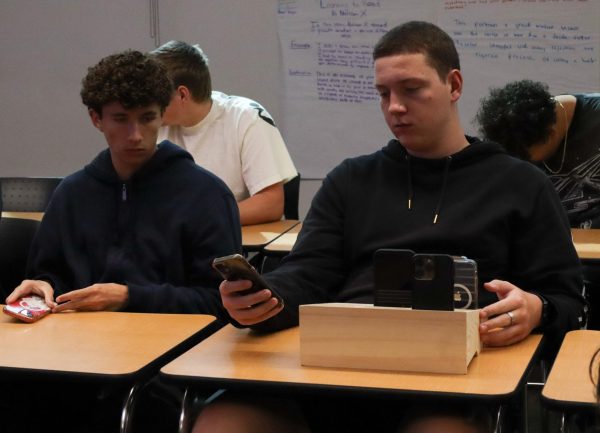
Students in Rose Cerofeci’s English 1A class place their phones in a special cubby that will be stored out of sight until class is dismissed on Sept. 30. It is part of Professor Cerofeci’s “no phones” classroom policy. (Erica Lee | The Union)
“What I have noticed the most is the lack of community, a rise of social anxiety and general anxiety, higher levels of depression and less focus,” Cerofeci added.
Edward Rice, the associate dean of humanities at ECC, said the usage of phones during class is disruptive to the learning environment and should never be in use while the professor is lecturing.
“As a regular tool in the classroom, I don’t think they are necessary,” Rice said.
Cerofeci devised a solution to solve the growing issues caused by phones. She had a plan to create a phone-free academic setting.
This plan came to her even before the Governor of California, Gavin Newsom, passed the “Phone-Free School Act” on Sept. 23. Cerofeci’s plan for a no-phone class setting began with the anxiety and depression rates increasing in her classes before the COVID-19 pandemic.
She had concerns with the depleting state of her students’ mental health. The English professor questioned how she could help her students.
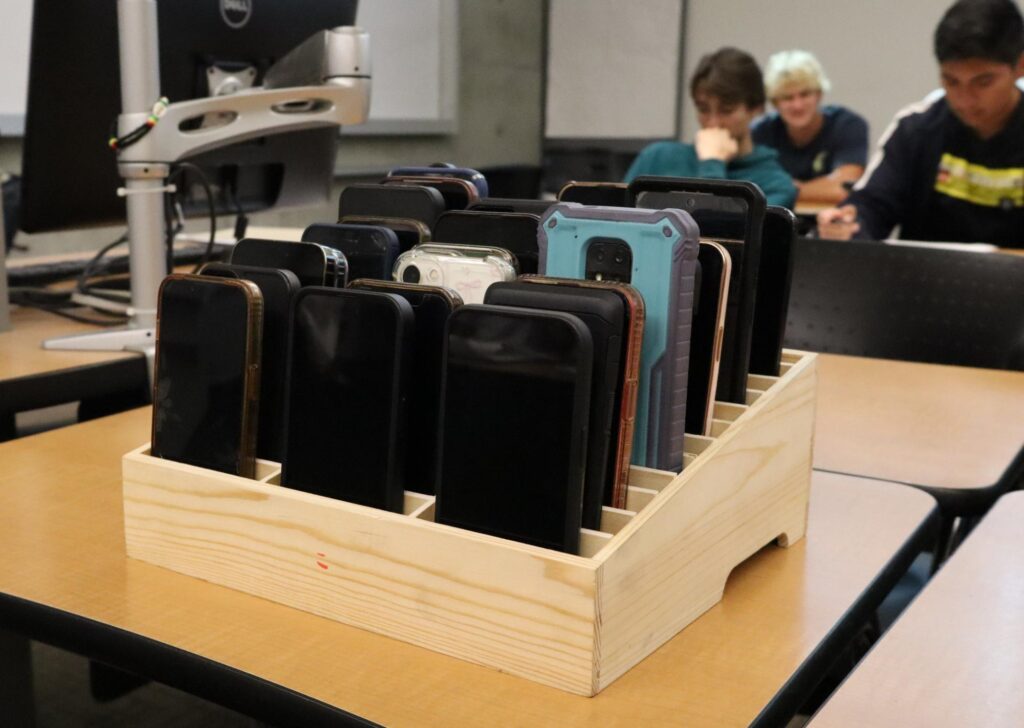
A wooden cubby containing the phones of Professor Rose Cerofeci’s English 1A students sits on a desk before being put away on Sept. 30. This is part of a “no phones” policy Cerofeci implemented for the 2024 fall semester. (Erica Lee | The Union)
“I was really distressed and felt like it was really important to me as a mentor and teacher of this age group to help with this crisis,” she said.
Cerofeci surveyed her students and asked them if their mental health had impacted their education.
“In one class, 28 students out of 30 said that it did have an impact on their education,” she said.
Cerofeci and her English students researched during the first weeks of school on the negative impacts phones have on students.
After discovering how harmful and disruptive phones are to the learning environment, the classroom made an unanimous decision.
“I told them, ‘you get to come to school, you don’t have to come to school, so why would you want something to take away from those opportunities’,” Cerofeci said. “It was unanimous, there wasn’t even an issue.”
According to Cerofeci, there was a major shift in the community and social aspect among her students after implementing this policy here in classrooms.
“Students are talking to each other and forming friendships,” she added.
One of the professor’s students noted a shift in the social aspect of the classroom without phones.
Ethan Aleixo, an 18-year-old business major, has been socializing with his peers more now that he is without a phone in class.
“I am able to socialize more and make more friends without the temptation of my phone,” Aleixo said.
The next change she noticed was student engagement.
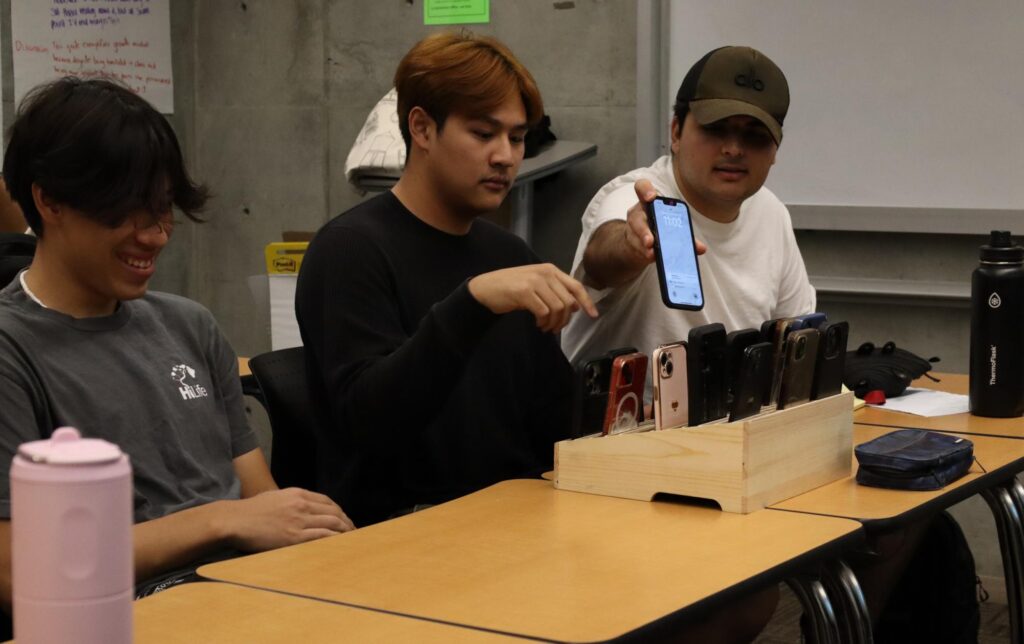
Justin Tam, 18, right, places his phone in a special cubby before his English 1A class begins on Sept. 29. The cubby, which holds the phones of his fellow classmates, is part of a “no phones” classroom policy instituted by Professor Rose Cerofeci. (Erica Lee | The Union)
“There was not a single person absent today,” Cerofeci said when referring to her English students. “Their submissions of their essays are 100%.”
Andy Potter, an 18-year-old business major, is experiencing an increase in attention and intrigue in his English 1A class as a result.
“I’m more interested in the class when the phone isn’t in my pocket,” Potter said.
The English instructor remembers how frustrating it was to teach to a class who were constantly distracted by their phones. To feel more present as a professor, she also conceals her cellphone.
Additionally, she feels as if she has flourished as an instructor who has built a stronger bond with her students.
“I feel like they get the best version of me,” Cerofeci said. “I rely more on them because they are more engaged and participating in rich conversation.”
Being able to connect with her students has given her a newfound sense of energy when teaching and reminded her why she chose to be a professor.
“It’s really brought so much of the joy of teaching back for me,” she added.
The professor said that other ECC professors thought it would be a difficult task to convince her students to sacrifice their phones during class.
“Since I have done it, they’ve been asking ‘You’re going to tell us how you were able to do this?’,” she said. “I keep telling them that I didn’t do it, I just gave my students the information and they made the choice.”
Rice believes Cerofeci’s decision to implement this phone-free practice was a courageous act because many faculty members at ECC may be afraid to participate.
“I commend her for taking a step out there and giving her students the option to do it,” Rice added.
According to Rice, she is the only instructor who practices a phone-restricted environment.
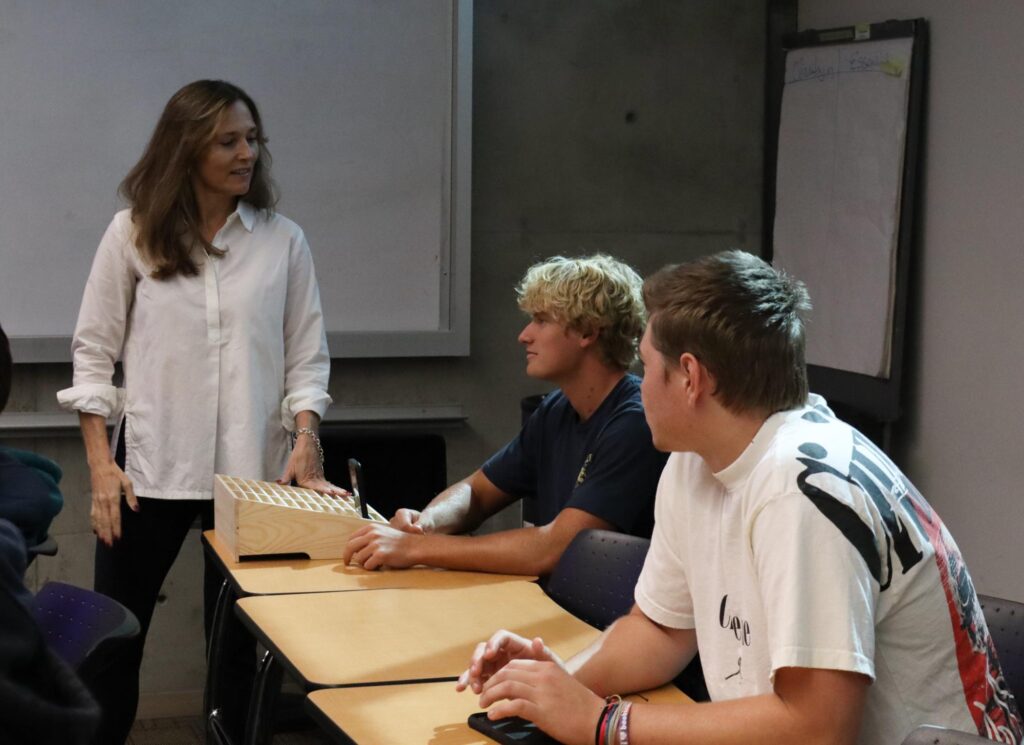
English professor Rose Cerofeci starts the process of collecting her students phones before class starts on Sept. 30. (Erica Lee | The Union)
She is hopeful that she will be the first of many professors who soon join this initiative.
“It is our responsibility to be a part of this movement,” Rice said. “It is unfair to my students when I have the simple ability to give them a different learning experience.”
